01What is BJJ
Brazilian Jiu-Jitsu, or BJJ, is a grappling art focused on positions, control, and submissions on the ground. Athletes learn to take the fight to the ground, improve their position, maintain control of an opponent, escape difficult positions, and finish with a permitted submission. There are no strikes in BJJ: results are determined by technical actions, taps, or the specific scoring system of a given ruleset.
02How BJJ Works in the BORETS System
BJJ is BORETS’s foundational discipline and the basis of a strong ground game. Freestyle wrestling and sport sambo add stand-up, entries, takedowns and throwing technique. Together they develop coordination, strength, endurance, mobility and body control.
03Positions, Transitions, and Control
Position determines who better controls space and has more options for the next action. Training covers guard, guard passing, side control, mount, back control, and methods for escaping these positions. The names might sound unusual, but the logic is consistent: first, stabilize the position, then transition further or attack.
04Submission and Tap Signal
Painful or choking submissions are practiced only within the group's rules and age limits. A partner can tap verbally or with clear physical taps; after the signal, the action immediately stops. It's important for a beginner to learn this before complex techniques. The specific submissions allowed for children and adults are determined by the coach and the ruleset.
05Points and Competition Rules
In tournaments, not random activity but defined technical actions are scored: takedowns, guard passes, control positions, and other elements of a specific ruleset. The number of points, prohibited actions, duration of the match, and method of determining the winner depend on the federation, age, belt, and category. Before competing, an athlete studies the specific ruleset they will be competing under.
06Gi and No-Gi
Gi refers to training in a kimono, where grips on the fabric are allowed within the rules. No-Gi takes place in a rashguard and shorts without pockets or metal parts; grips on clothing are not used. Both formats develop positional thinking but alter distance, pace, and available grips. Please confirm which format is used in your group before the first class.
07Belts and Promotion
A belt signifies a stage of technical development but is not a promise of results within a certain number of months. Children's and adult belt systems differ, and promotion requirements are determined by the academy and the corresponding ruleset. At BORETS, instead of asking 'when will I get a belt,' it's better to ask what skills, consistency, and technical understanding are expected at the next stage.
08How Beginners Start
Initially, the coach explains contact rules, the tap signal, basic positions, and movement execution techniques. The complexity of drills increases gradually. Partners and training loads are selected based on age, size, and experience. If you have previously trained in another grappling art, please mention it: it will be easier for the coach to explain differences in rules and habitual reactions.
09BJJ for Children
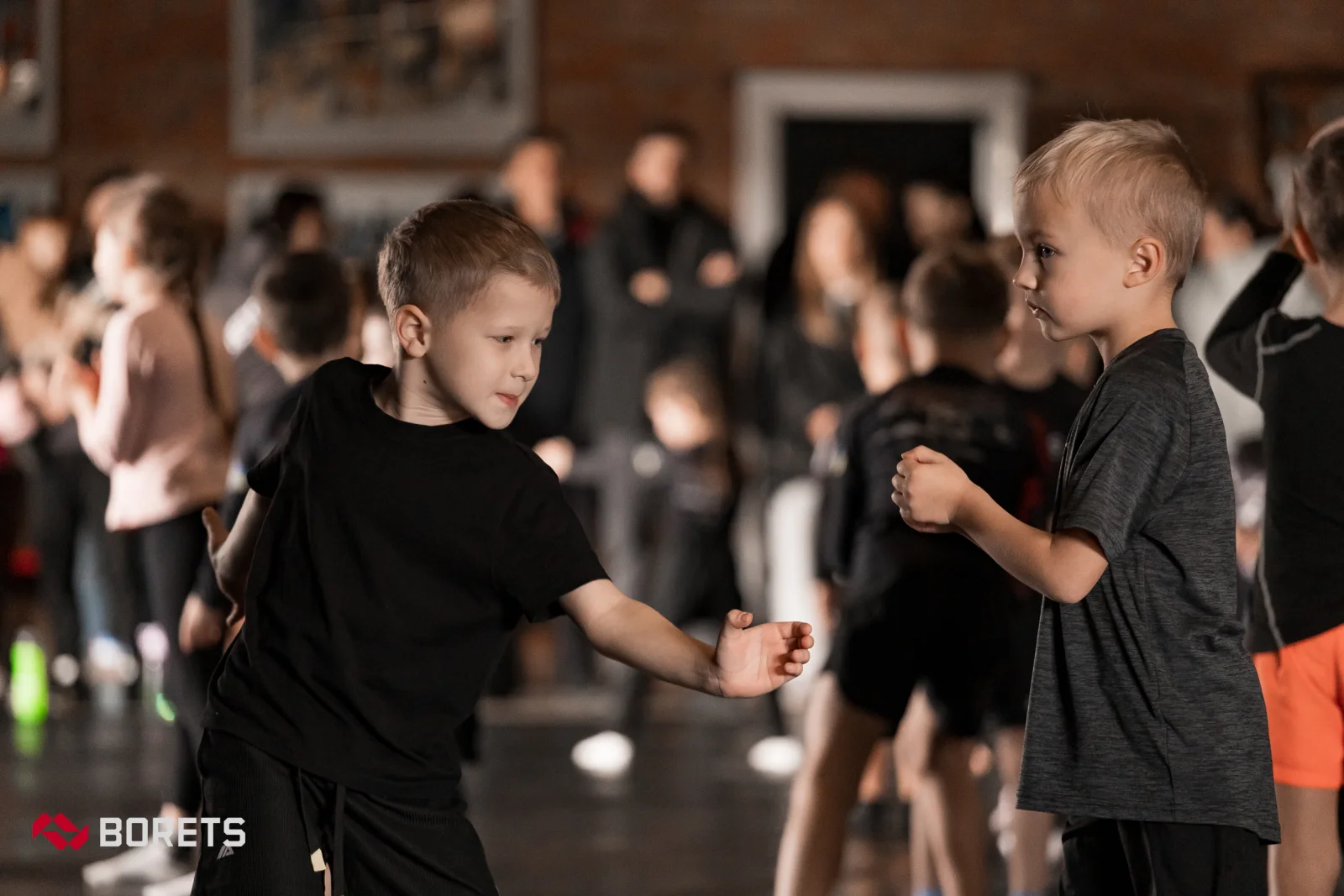
Children's groups are formed based on age and experience. For 4–7 year olds, there are more short movement drills, basic positions, and rules for partner work. For 8–11 year olds, the volume of techniques and repetitions increases. For 12–15 year olds, tactics, more complex combinations, and, if desired, a competitive path are added. Participation in tournaments is not mandatory.
10BJJ for 16+ Beginners
You can start without prior athletic preparation. Initially, adults learn basic positions, ground movements, contact rules, and gradually increasing physical loads. There are groups for beginners and those who are already training. The Mykolaivka schedule includes a separate adult group; other available options will be confirmed by the administrator.
11Competitions – A Separate Path
In tournaments, participants are divided according to the organizer's rules: by age, weight, belt, or experience level. The decision to compete is made not due to group pressure, but after assessing the athlete's readiness and the coach's recommendation. Training for personal development remains a valid choice at any age.
12What to Bring to Your First Class
Prepare clean athletic wear without pockets, zippers, or metal parts, indoor shoes for walking to the mats, and a bottle of water. Nails should be short, and jewelry must be removed. The coordinator will advise if a kimono is specifically required for your group and what rules apply in the changing rooms.
13Where to Train in Kropyvnytskyi
BORETS Academy has four locations in Kropyvnytskyi. The administrator will advise which of them currently offer the BJJ groups you need. State your age, previous experience, preferred district, and days – in response, you will receive available options and a link to the schedule.