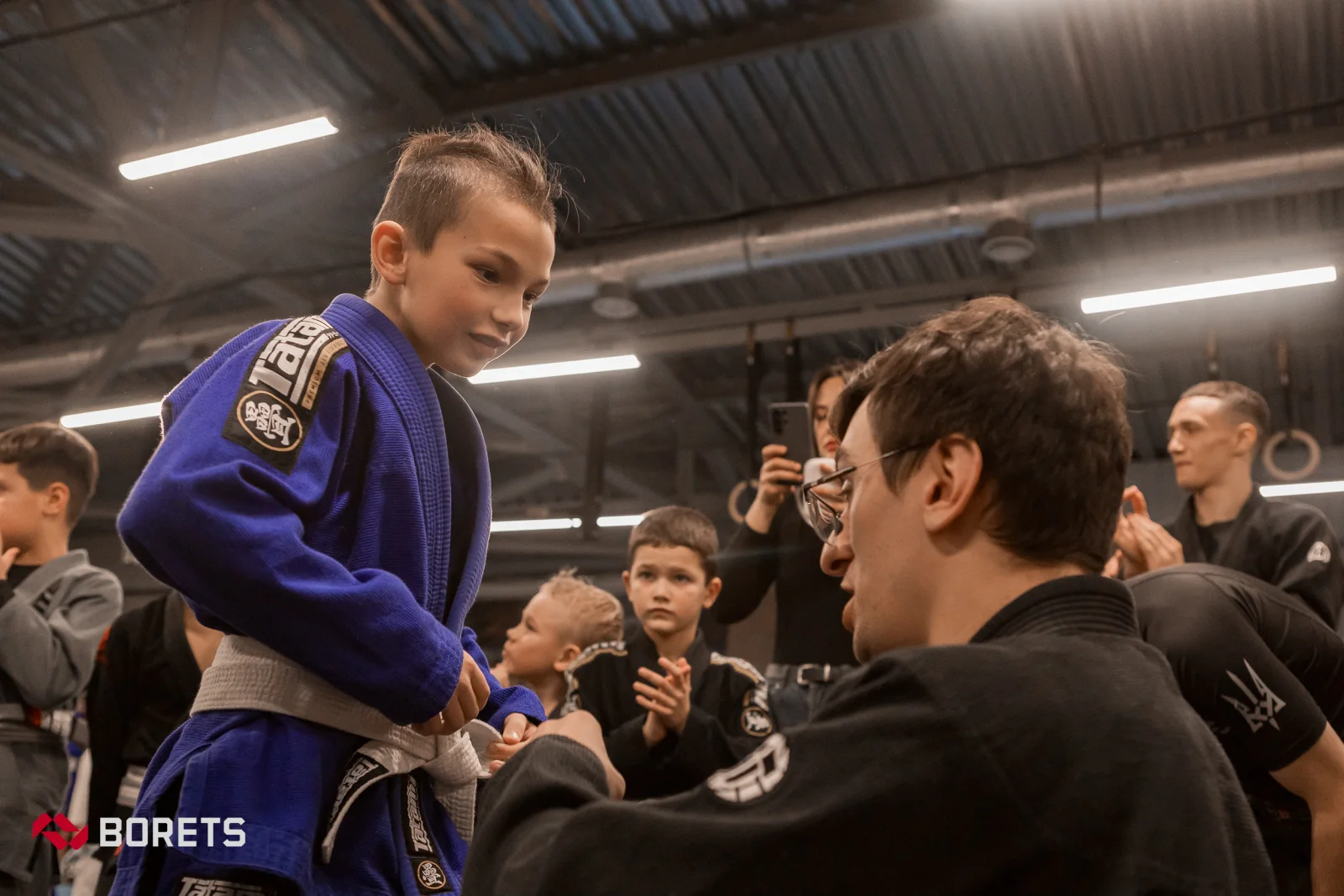
01Find out exactly what your child is saying no to
“I do not want to go to training” may refer to today, a particular exercise, the group or the sport itself. Avoid making a decision in the middle of a morning argument. At a calm moment, ask when the reluctance started and which part of class feels hardest. “Which part of training would you like to change?” leaves more room for an answer than demanding an immediate explanation for lost motivation.
02Separate the sport from a difficult schedule
Look at the whole day: school, travel, meals, homework, other activities and rest. Sometimes the timing or number of commitments needs to change, rather than the sport. Together, identify where the rush begins and what could move. Do not add more classes as a way to “get used to the workload.” First check whether a typical week still has room for rest and free time.
03Listen to a specific story from training
Your child may not understand an exercise, know how to approach the coach or want to work with a particular partner. Ask them to describe what happened in their own words and let them finish. Do not dismiss their feelings by saying “there is nothing to be scared of.” If they describe pain, humiliation or unwanted contact, do not ask them simply to put up with it: stop their involvement in that situation and address it with the responsible adult.
04Talk with the coach about what you have noticed
Share your child’s actual words without labels such as “lazy” or “weak.” Ask at which stage of class the difficulty arises and whether the tasks match their experience. The agreement may involve clearer instructions, a different training partner or another group, if one is available. The coach should explain the next step; parents should then describe it to the child in language they understand and listen to their response.
05Distinguish settling into training from competitive goals
A beginner is still learning their way around the space, following instructions and trying unfamiliar movements. They do not need to want medals or matches from the start. At BORETS, children can train without competing; a competitive pathway is discussed separately. If competitions themselves are what worries your child, clarify that boundary with the coach and do not treat agreeing to attend classes as agreeing to compete.
06Offer a small, clear set of choices
Discuss two realistic options your family can support: another available time, a conversation with the coach before class, or a break with an agreed date to revisit the question. Do not promise a group change until the coordinator confirms it is possible. A younger child needs an adult’s help to choose; a teenager should take part in decisions about their schedule and training goals.
07Decide what you will review next time
Instead of insisting on “finishing the whole season,” agree on a clear next step and a time to talk again. For example, after a session arranged with the coach, discuss whether the task was clearer and working with the group felt more comfortable. Do not judge the outcome only by the absence of protests before leaving home. Your child should be able to say what has changed and what still needs the adults’ attention.
08Support effort without bargaining over every class
Notice specific actions: your child packed their belongings, asked a question or tried an unfamiliar exercise. Constant comparisons with more successful participants, or a promised gift for every session, shift the conversation away from their own experience. Ask what they would like to learn to do. A goal can be small and can change; it does not have to match their parents’ sporting expectations.
09Changing a decision also calls for a conversation
If your child still does not want to continue after discussion and agreed changes, consider a break or another activity without treating it as failure. At BORETS in Kropyvnytskyi, the coordinator can help review age, experience, available groups and travel to the gym. Choosing a suitable environment starts with that information. The family’s task is to find a practical way to keep physical activity in the child’s life, rather than win an argument.