01Start with age and a convenient schedule
Attending classes regularly is easier when travel and timing don't conflict with school, sleep, and rest. At BORETS, groups are divided by age and experience, so first check not the gym name, but the specific group: who leads it, on which days it trains, and how much time the family will realistically spend traveling.
02The BORETS System: striking, throws, and strong ground game.
Brazilian jiu-jitsu is the foundation of the system, providing positional work, control and ground technique. Freestyle wrestling and sport sambo add stand-up, entries, takedowns and throws. Together they form one program for coordination, strength, endurance, mobility and body control.
034–7 years: movement and first group rules
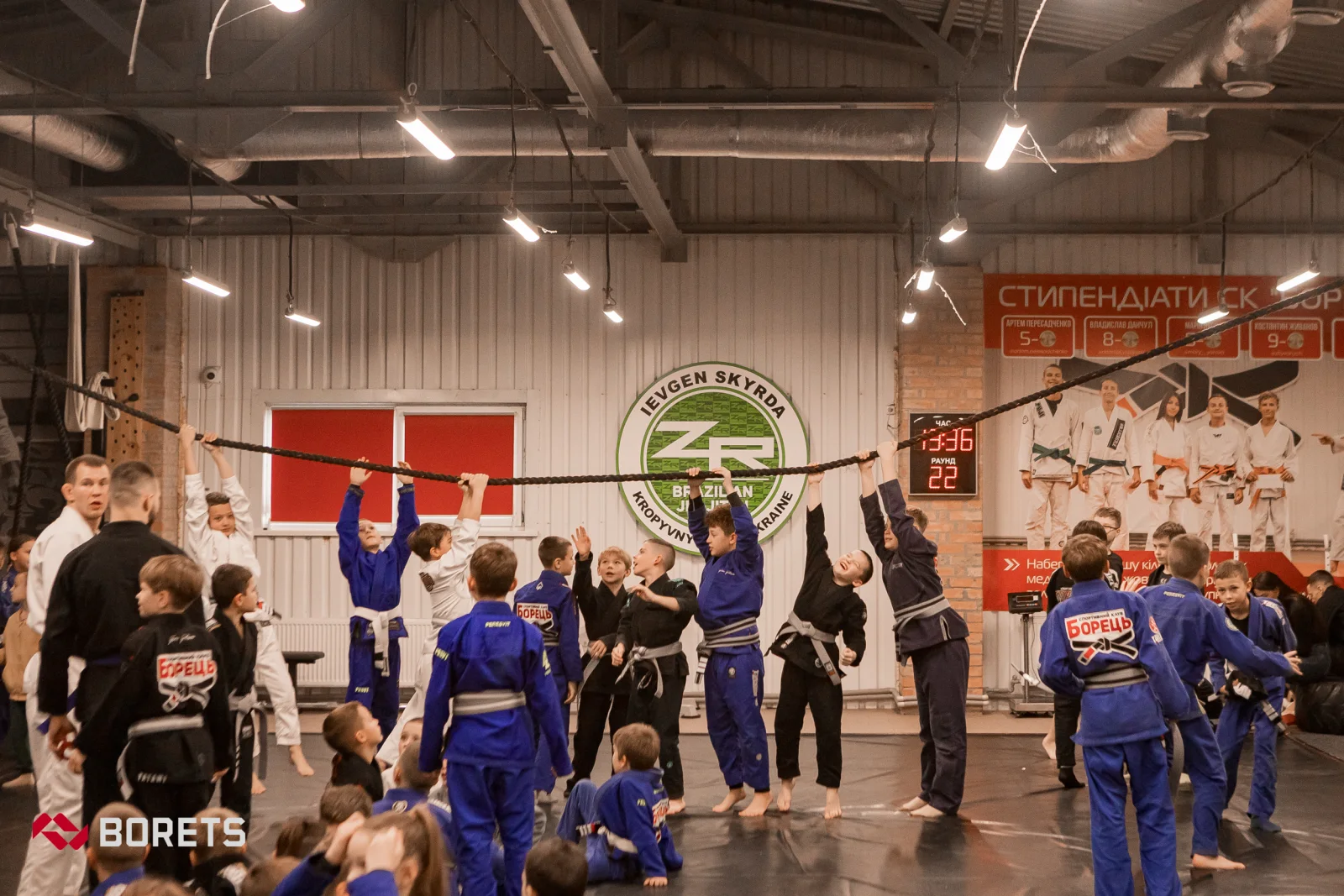
At a young age, children get acquainted with the gym through short movement tasks, attention games, fall techniques, basic positions, and simple partner work. The main thing is not the number of techniques, but the ability to listen to explanations, wait their turn, stop an action on signal, and gradually interact alongside other children.
048–11 years: technical foundation and regularity
In intermediate groups, there is more technique in striking and ground game, partner work, and repetitive drills. Children learn to control movement, work with partners of appropriate age and experience, and return to an exercise after a mistake. The schedule includes separate groups for experienced participants — progression to these is determined by the coach.
0512–15 years: technique, tactics, and personal choice
Teenage groups combine technique, tactics, physical conditioning, and responsibility for one's own progress. One can train for self-improvement or prepare for competitions. The competitive path is not automatically activated: the teenager's desire, readiness, and the coach's recommendation are discussed with the family.
06A beginner's first weeks
At the start, the child gets acquainted with contact rules, basic positions, and the group's rhythm. The coach gradually adds more complex exercises and selects partners considering age, size, and experience. Parents should evaluate not the speed of results, but whether the child understands the rules, knows whom to approach, and can return to work without constant pressure.
07How to evaluate a coach and group
Observe if the coach explains tasks concisely and clearly, demonstrates movements, stops dangerous or uncontrolled actions, corrects mistakes without humiliation, and monitors partner selection. Ask what the child will do in the first weeks, how progress is communicated, and whom to contact after class.
08What to ask your child after their first visit
Instead of a general "Did you like it?", ask: what was clear, which task proved difficult, did the child hear the stop signal, do they know the coach's name, and do they want to return to this group? One answer does not determine the entire choice, but specific questions help distinguish normal apprehension from a situation worth discussing with the instructor.
09Four locations in Kropyvnytskyi
BORETS groups operate at the central gym on Viktor Chmilenka Street, at the "Portal" shopping center on Soborna Street, at the "Depot" gym on Preobrazhenska Street, and in Mykolaivka on Korolenka Street. Each location has its own set of age groups and coaches. Use the current schedule, and confirm your spot in the group before your first visit.
10How to apply
Indicate age, prior experience, main request, and preferred location. The coordinator will check this information against the current schedule and suggest a suitable BORETS group. If you haven't decided on an area or direction yet, choose "Recommend a location" — the team will ask clarifying questions and explain the next step.