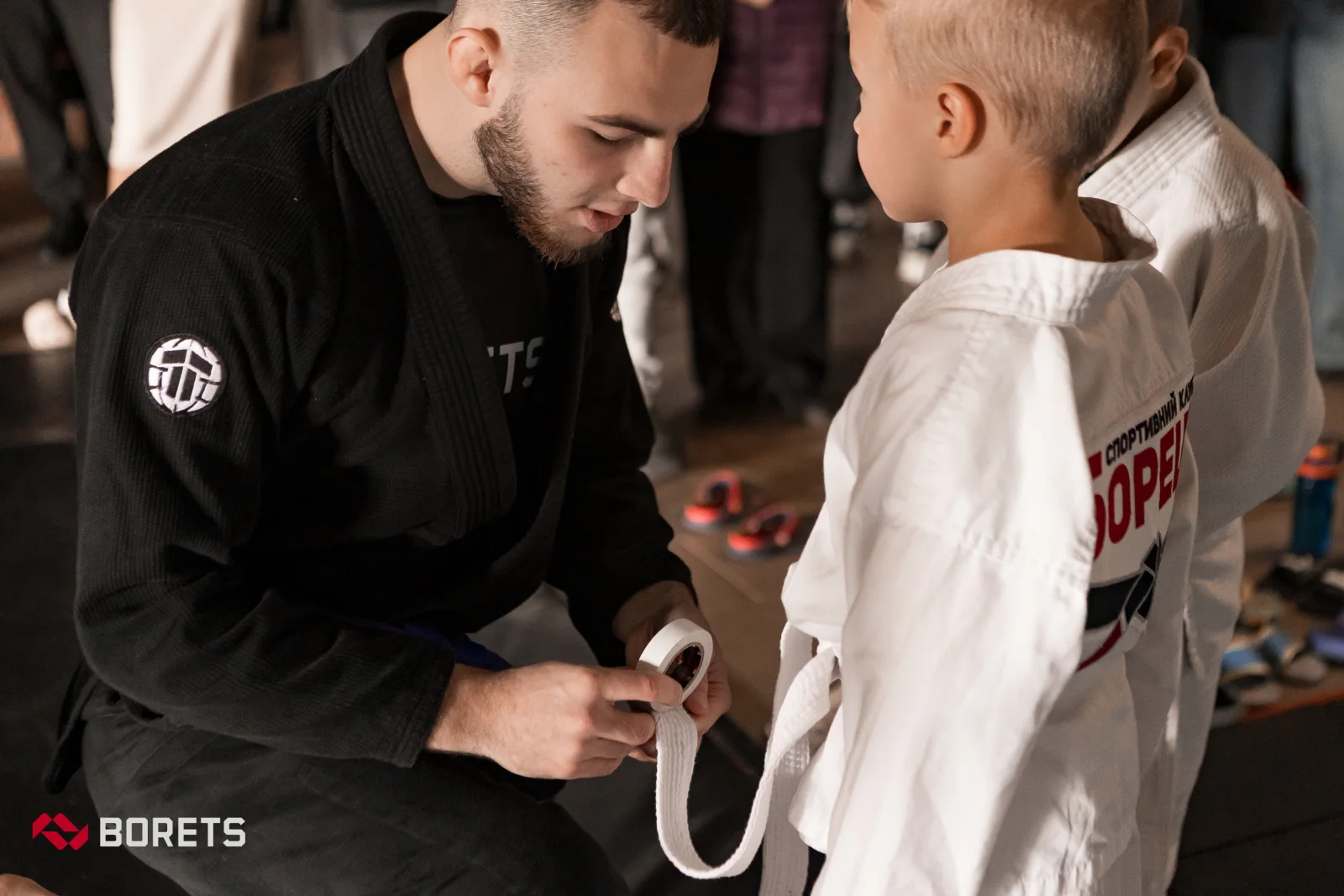
01Start with a specific skill
The wish to “build character” is hard to turn into a task a child can understand. It is more useful to choose one action: pack their own training clothes, listen to an explanation, ask for help or finish a familiar exercise. A sports program provides situations where children can repeat these actions alongside a coach and their peers. Attending the gym alone does not guarantee change: group rules, coaching and family support between classes all matter.
02Discipline starts with clear rules
In wrestling, rules have a practical purpose: stop at the signal, wait for instructions, work in the designated area and control contact with your partner. Children need to know exactly what is expected and why. Ask the coach how they remind children of the rules and respond when rules are broken. Shouting, humiliation or physical exercise as punishment should not be accepted as the necessary price of discipline. Support the same simple agreements at home.
03Independence can start with a training bag
Make a short checklist together: training clothes, water, a change of shoes and space for used clothing. An adult can help a younger child check the bag; an older child can gradually take over all the preparation. Do not take the task away after the first mistake. First remind them where to find the list and give them time to put things right. After class, children can unpack their own belongings and say what needs to be ready for next time.
04Confidence grows from experiences children can recognise
Instead of saying “you are the strongest,” describe what you saw: your child asked a question, repeated a difficult movement or calmly returned to an exercise. This makes it easier to discuss personal progress without constant comparisons with others. Together with the coach, choose a small technical task and later check what has become clearer. A medal is not the only evidence of effort, and a disappointing match does not define a child’s abilities.
05A training partner is someone you are responsible for too
A partner exercise requires coordinated action. Children need to hear the stop signal, stop the technique when it is given, work at the permitted intensity and tell the coach if anything is unclear. This is a concrete way to practise responsibility for another person. After training, ask how your child helped their partner complete an exercise. Avoid making every conversation about whom they beat or lost to that day.
06The adult’s role changes with age
For ages 4–7, short explanations and help with the sequence of actions are appropriate. At ages 8–11, you can agree on preparing belongings, attending regularly and setting small goals for class. With teenagers aged 12–15, it is important to discuss their own goals and their right to disagree. BORETS runs separate programs for these age groups; the coordinator also considers experience and the family’s schedule when choosing a specific group.
07Discuss a mistake without labelling the child
If a child did not complete a task, first find out whether they understood the explanation and knew the next step. Discuss the action: “What would help you get ready on time?” rather than “You are irresponsible.” On the mat, the coach addresses technical mistakes; parents do not need to give different instructions from the sidelines. If an agreement repeatedly fails, review it together instead of adding more reproaches.
08Agree on how to discuss progress
Choose a calm time to talk with the coach and describe one specific situation. Ask what they notice in class and what small action your family could support at home. Do not expect every child to achieve the same results or change by a set date. If your child no longer wants to train, listen to their reasons first: regular attendance depends on a real agreement, not only on adult supervision.
09Getting to know the BORETS approach
In Kropyvnytskyi, BORETS offers BJJ and wrestling classes for children from age 4. Before enrolling, tell us about your child’s age, experience and your family’s expectations, and ask how the specific group works. The coach is responsible for sports tasks and the running of the class. Raising a child remains a shared responsibility among adults; a sports program does not replace psychological or medical help when it is needed.